DealCheck vs PropStream: Which Real Estate Tool Is Best in 2026?
DealCheck vs PropStream compared: pricing, MLS data, sales comps, and deal calculators to help real estate investors choose the right tool.
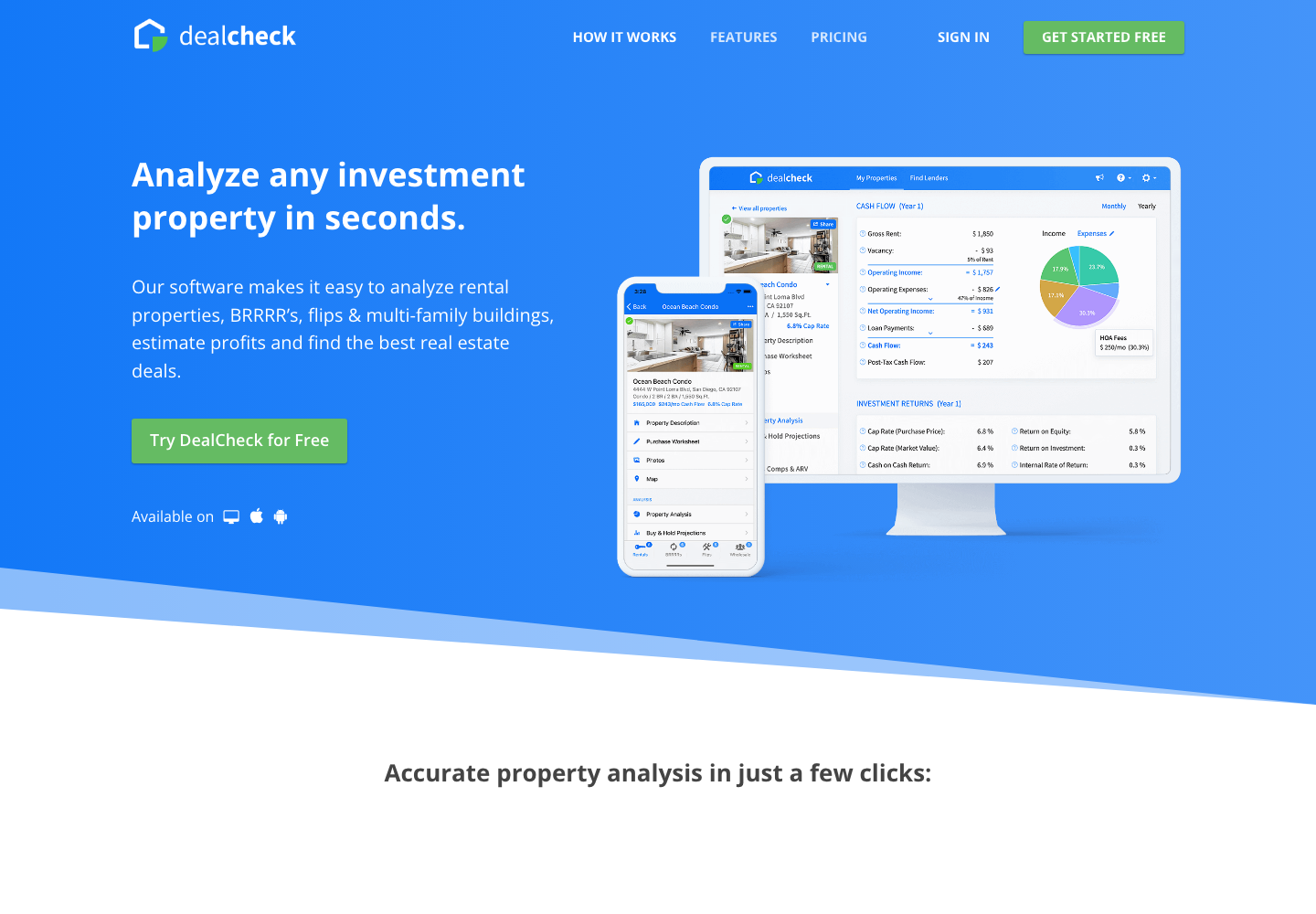
Choosing between DealCheck and PropStream is one of the most common dilemmas for modern real estate investors, but evaluating DealCheck vs PropStream starts with recognizing that they were built to solve two fundamentally different problems. One is an underwriting calculator and portfolio management platform designed to stress-test your numbers once you find a property; the other is a nationwide property database and lead generation powerhouse built to help you discover motivated sellers and off-market opportunities.
Because real estate software subscriptions add up quickly, comparing DealCheck vs PropStream before signing up helps protect your operating budget. While both platforms offer comparable sales analysis, their daily workflows, data depth, and pricing structures diverge sharply. In this head-to-head DealCheck vs PropStream guide, we examine features, data accuracy, pricing as of September 2026, and practical deal-flow scenarios so you can decide which platform belongs in your investing stack.
TL;DR: DealCheck vs PropStream at a Glance
If you are short on time, this summary breaks down how DealCheck vs PropStream stack up across core capabilities:
- DealCheck is best for financial underwriting: Choose DealCheck if you already have leads or properties under consideration and need fast, deep financial modeling for buy-and-hold rentals, BRRRR projects, fix-and-flips, or multi-family properties.
- PropStream is best for off-market lead generation: Choose PropStream if your primary bottleneck is finding motivated sellers, pulling targeted marketing lists with distress filters, running skip traces, and evaluating neighborhood market heat.
- Complementary rather than mutually exclusive: Many active wholesalers and flippers use both tools together — pulling and filtering lists in PropStream, then running deep financing scenarios in DealCheck.
- Fast screening alternative: For investors who simply want rapid ARV checks without complex setups, running numbers through the free ARV calculator provides an instant third path.
The table below illustrates the primary differences in the DealCheck vs PropStream matchup:
| Dimension | DealCheck | PropStream | Winner for Category |
|---|---|---|---|
| Primary Focus | Financial analysis, cash flow, and ROI modeling | Off-market prospecting, list pulling, and marketing | Context-dependent |
| Lead Generation & Filters | None (requires entering specific addresses) | 155M+ property records with 120+ search filters | PropStream |
| Comparable Sales (Comps) | Public records via RentCast; customizable adjustments | Multi-sourced public records and MLS sales data | PropStream |
| Financial Underwriting | Deep multi-year projections, BRRRR, flips, syndications | High-level estimates and basic equity/mortgage math | DealCheck |
| Pricing (as of September 2026) | Free tier; Plus $14/mo ($10/mo annual); Pro $29/mo ($20/mo annual) | $99/mo standard plan ($81/mo billed annually) + add-ons | DealCheck |
| Skip Tracing & Direct Mail | Not supported | Built-in ($0.12/skip trace; postcards from ~$0.40) | PropStream |
| Lender-Ready Reports | Comprehensive, branded PDF reports and web sharing | Printable property overviews and basic CMA reports | DealCheck |
| Mobile Experience | Dedicated iOS and Android apps with full offline sync | Mobile app available, but desktop dashboard is superior | DealCheck |
| Best Suited For | Buy-and-hold landlords, BRRRR investors, rehab flippers | Wholesalers, full-time deal finders, high-volume agents | Tied by strategy |
Core Architectural Differences: Underwriting vs Prospecting
To make sense of DealCheck vs PropStream, it helps to understand where each application sits in the real estate acquisition lifecycle. Real estate investing involves two primary operational phases: finding deals (prospecting) and analyzing numbers (underwriting).
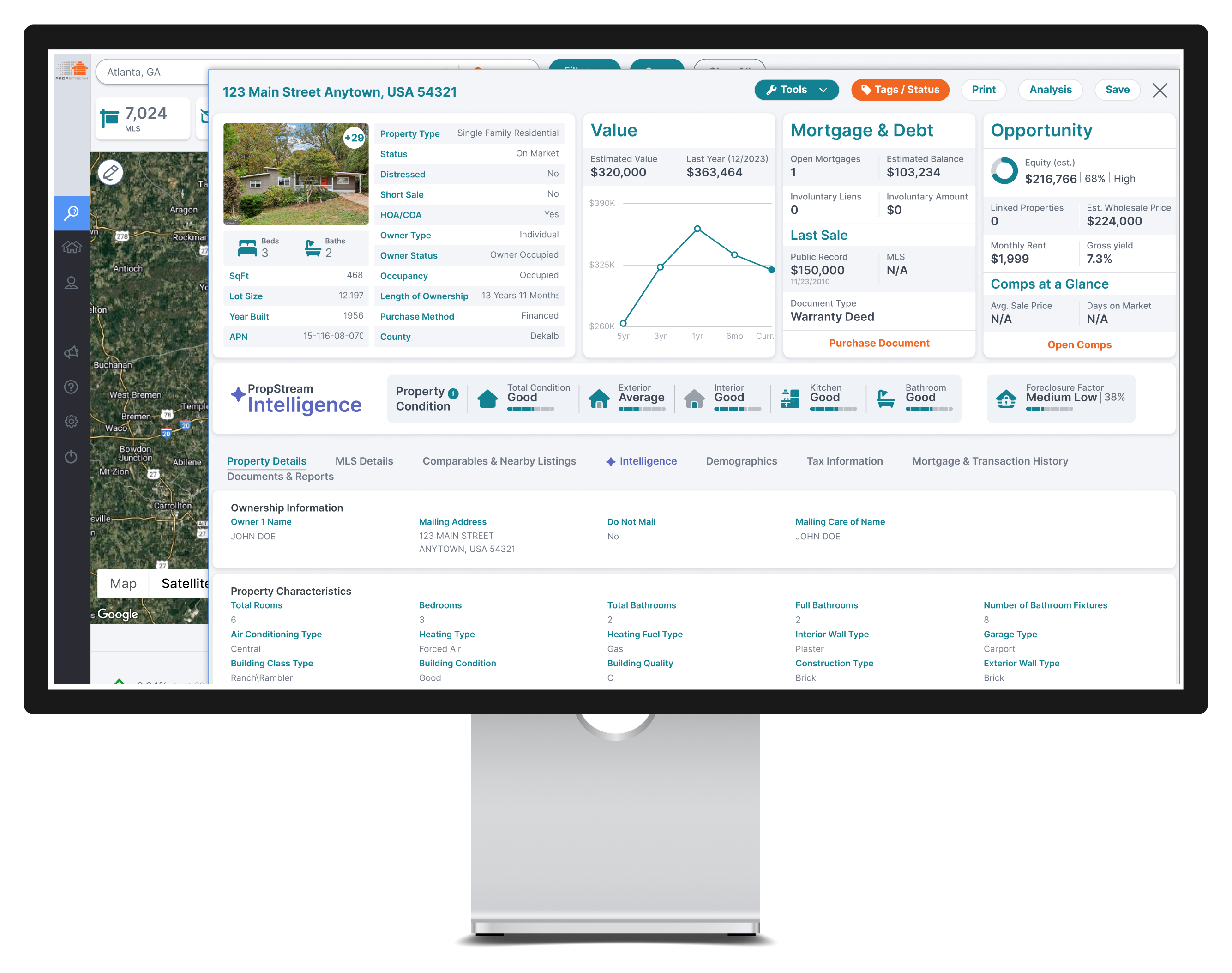
In the prospecting phase, investors search entire zip codes, filter for absentee owners or tax delinquencies, identify equity spreads, and contact owners. This is the domain where PropStream operates. PropStream aggregates county deed registries, mortgage balances, tax assessor data, and active MLS feeds into a searchable map covering over 155 million US parcels.
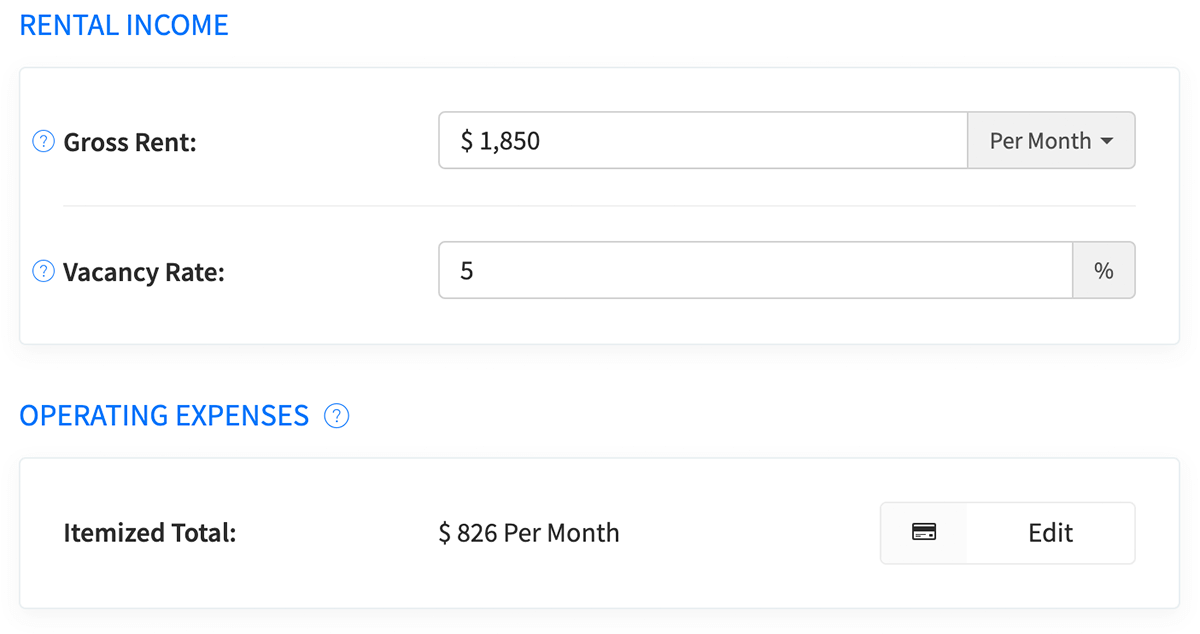
In the underwriting phase, an investor takes a specific house address, calculates estimated repair costs, models loan amortization, forecasts vacancy rates, and calculates cash-on-cash return. This is the core strength in any DealCheck vs PropStream comparison for DealCheck. DealCheck turns raw property numbers into forward-looking financial balance sheets.
Understanding this split clarifies why evaluating DealCheck vs PropStream is rarely about which app has better code; it is about which part of your deal funnel is currently broken.
DealCheck Overview: Strengths, Limitations, and Pricing
DealCheck was founded by software engineer and real estate investor Anton Ivanov to solve the friction of clunky Excel spreadsheets. The software provides an intuitive, step-by-step workflow where users import a property, review purchase parameters, customize financing assumptions, and review automated performance projections.
Key Strengths of DealCheck
When reviewing DealCheck vs PropStream on underwriting depth, DealCheck provides specialized financial toolsets that generalist data tools overlook:
- Multi-Strategy Financial Projections: Whether you are evaluating a single-family turnkey rental, a duplex BRRRR, a 12-unit apartment building, or a fix-and-flip project, DealCheck formats calculations specifically for that asset class.
- Rehab Cost Budgeting: The platform allows investors to build line-item renovation budgets, separating cosmetic repairs from structural mechanical replacements.
- Purchase Offer Calculator: Instead of guessing what to bid, DealCheck lets you work backward by setting your target cash-on-cash return or cap rate to compute your maximum allowable purchase price.
- Clean Presentation Reports: Pro subscribers can generate polished PDF presentations with customized cover photos, logos, and disclosures to send directly to hard money lenders or private partners.
DealCheck Pricing (as of September 2026)
DealCheck remains one of the most accessible software tools in real estate investing:
- Starter Plan ($0/month): Allows up to 15 saved properties, 5 property photos, 5 sales and rental comps per property, and core financial calculators. It is free forever, making it ideal for novice investors analyzing occasional deals.
- Plus Plan ($14/month or $10/month billed annually): Expands storage up to 50 properties, 15 photos, 10 sales comps, and unlocks custom purchase criteria.
- Pro Plan ($29/month or $20/month billed annually): Unlocks unlimited property saves, unlimited photos, unlimited comps, custom logo branding on reports, and CSV data export capabilities.
Details on current tiers can be verified directly on the official DealCheck pricing page.
Where DealCheck Falls Short
In an objective DealCheck vs PropStream assessment, DealCheck has distinct operational boundaries. First, DealCheck is not a prospecting database. You cannot open DealCheck and query all vacant properties in Dallas, Texas; you must already possess the address of a property you want to evaluate. Second, while DealCheck pulls recent sales comps via RentCast, it does not connect to real-time broker MLS feeds for pending contract data.
PropStream Overview: Strengths, Limitations, and Pricing
PropStream has established itself as the standard research suite for real estate wholesalers and acquisitions teams. The platform consolidates public records and multi-sourced MLS sales data into a centralized search engine that allows investors to build targeted prospect lists in minutes.
Key Strengths of PropStream
In the context of DealCheck vs PropStream, PropStream offers capabilities designed for aggressive marketing and deal generation:
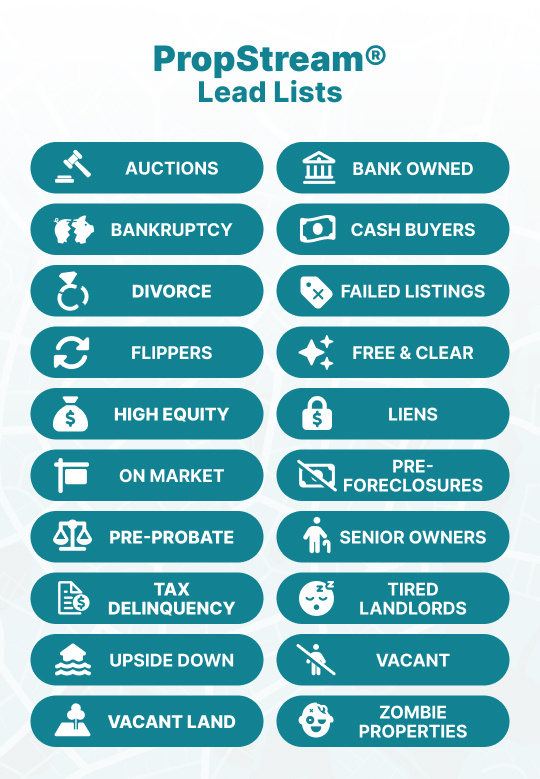
- Massive Property Database: PropStream covers more than 155 million residential and commercial properties nationwide, detailing current ownership records, estimated equity, mortgage histories, and tax assessor details.
- 120+ Search and Distress Filters: Investors can stack search criteria to uncover highly motivated sellers. Popular presets include pre-foreclosures, failed MLS listings, zombie properties, tired landlords, high equity, and tax liens.
- Integrated Skip Tracing: PropStream lets you skip trace property owners with a single click, pulling verified phone numbers and email addresses directly into your account.
- Direct Mail Marketing Engine: Once you create a targeted list, you can design and order direct mail postcards or letters directly from the dashboard.
PropStream Pricing (as of September 2026)
PropStream uses a subscription-plus-usage pricing model:
- Standard Subscription ($99/month, or $81/month billed annually): Includes access to nationwide search, comprehensive property cards, 120+ filters, and 10,000 property downloads or exports per month.
- Skip Tracing Add-On: Billed on demand at $0.12 per skip trace for phone and email lookup.
- Direct Mail Postcards: Variable pricing starting around $0.40 to $0.70 per postcard depending on volume and mailing format.
- Additional List Exports: Charged at $0.10 per additional lead beyond your 10,000 monthly allotment.
Subscription terms and plan features are published on the official PropStream pricing page.
Where PropStream Falls Short
Examining DealCheck vs PropStream reveals that PropStream's underwriting tools are secondary to its search engine. While PropStream includes a rehab calculator and equity breakdown, it does not provide granular multi-year cash flow projections, internal rate of return (IRR) models, or customizable BRRRR refinance schedules. Furthermore, the $99 monthly commitment can be difficult to justify for casual investors who only analyze one or two properties each month.
Detailed Feature Comparison: DealCheck vs PropStream
To help you decide between DealCheck vs PropStream, let us evaluate the two platforms across the critical functional pillars that real estate professionals rely on every day.
1. Lead Generation: DealCheck vs PropStream
When comparing DealCheck vs PropStream for lead generation, there is no contest: PropStream wins decisively.
DealCheck has zero outbound prospecting tools. It cannot generate mailing lists, locate absentee owners, or perform skip tracing. PropStream, by contrast, is built from the ground up for list building. You can filter properties by loan-to-value ratio, years of ownership, and distress triggers, export the list, and immediately begin outbound cold calling or direct mail campaigns.
If your primary business bottleneck is finding off-market opportunities, PropStream is the necessary platform. When evaluating DealCheck vs PropStream solely on lead generation volume, PropStream wins without question.
2. Comps and Valuation: DealCheck vs PropStream
Comps quality is a central point of comparison in any DealCheck vs PropStream review. Accurate valuations require analyzing recent, nearby, and renovated sales, as outlined in Fannie Mae comparable sales guidelines.

PropStream pulls comp data from both public county deed records and local MLS boards across most US metropolitan areas. Its Comparative Market Analysis (CMA) tool allows you to filter sales by radius, recording date, square footage, and property type, making it easy to see pending transactions alongside closed recordings.
DealCheck also includes a robust sales and rental comps tool powered by the RentCast data network. DealCheck automatically identifies comparable properties, computes the average price per square foot, and allows users to manually include, exclude, or adjust comps.
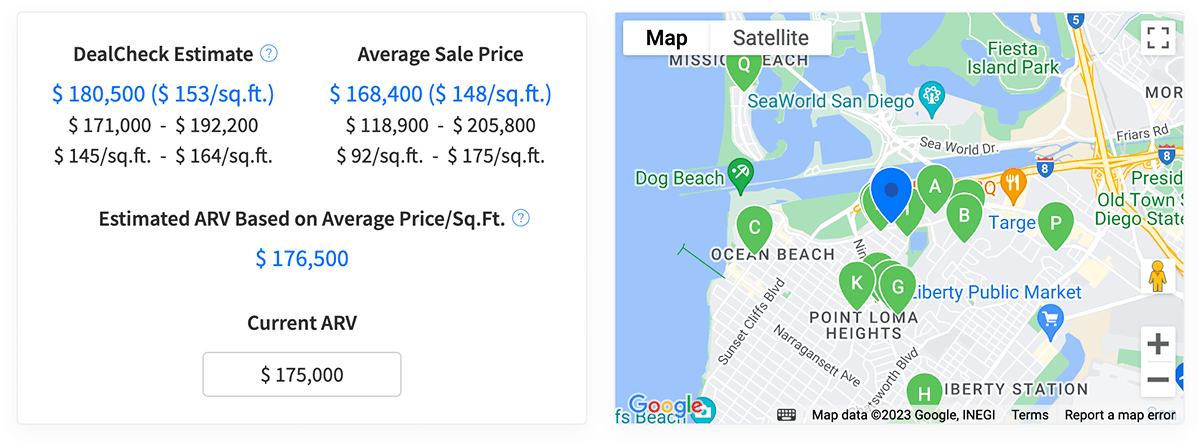
In the DealCheck vs PropStream matchup for comps, PropStream holds an edge in MLS data breadth, whereas DealCheck makes it easier to manually tweak line-item adjustments and see how those changes immediately alter your projected cash flow.
3. Underwriting Precision: DealCheck vs PropStream
When evaluating DealCheck vs PropStream for underwriting rigor, DealCheck is the clear victor.
DealCheck allows you to model complicated capital structures:
- Primary mortgages, secondary financing, seller carryback notes, and interest-only bridge loans.
- Itemized rehab budgets with contingency buffers.
- Variable closing costs, loan origination points, and transfer taxes.
- Multi-year cash flow forecasts accounting for rent growth, expense inflation, and tax depreciation per IRS guidelines.
- Dynamic BRRRR analysis detailing cash invested, cash out after refinancing, and permanent equity left in the deal.
PropStream calculates estimated mortgage payments and potential rental yields, but it does not provide institutional-grade underwriting tables or customizable holding cost calculators. For investors prioritizing cash flow precision, DealCheck vs PropStream is an easy decision in favor of DealCheck.
4. Mobile Usability: DealCheck vs PropStream
Mobile workflow is another differentiator in the DealCheck vs PropStream comparison. DealCheck was built mobile-first; its native iOS and Android apps are responsive, fluid, and support cloud syncing across devices. When walking a property with a contractor, you can adjust renovation figures in DealCheck right from your smartphone.
PropStream offers a mobile application with drive-for-dollars tracking, but its primary data power resides on its desktop web dashboard. Navigating dense property cards, tax histories, and 100-column export spreadsheets is noticeably less ergonomic on a handheld mobile screen.
5. Pricing and Value: DealCheck vs PropStream
In terms of cost accessibility within the DealCheck vs PropStream comparison, DealCheck is significantly more affordable:
- An investor can use DealCheck indefinitely on the free tier or upgrade to the full Pro version for $240 per year ($20 per month billed annually).
- PropStream requires an entry investment of $972 per year ($81 per month billed annually) or $99 on a month-to-month plan, excluding skip tracing and mailing costs.
For investors who are not yet actively closing deals or who already have deal flow through MLS agents, paying for PropStream can result in unnecessary overhead. This cost disparity makes DealCheck vs PropStream especially relevant for newer investors on lean budgets.
Where ARVHQ Fits for Rapid Deal Screening
When investors weigh DealCheck vs PropStream, they often overlook a third use case: rapid initial deal screening.
Before opening PropStream to perform a full neighborhood deep dive or configuring a multi-tab financial sheet in DealCheck, investors often need to answer one urgent question: Does this address have enough after repair value (ARV) spread to warrant a deeper look?
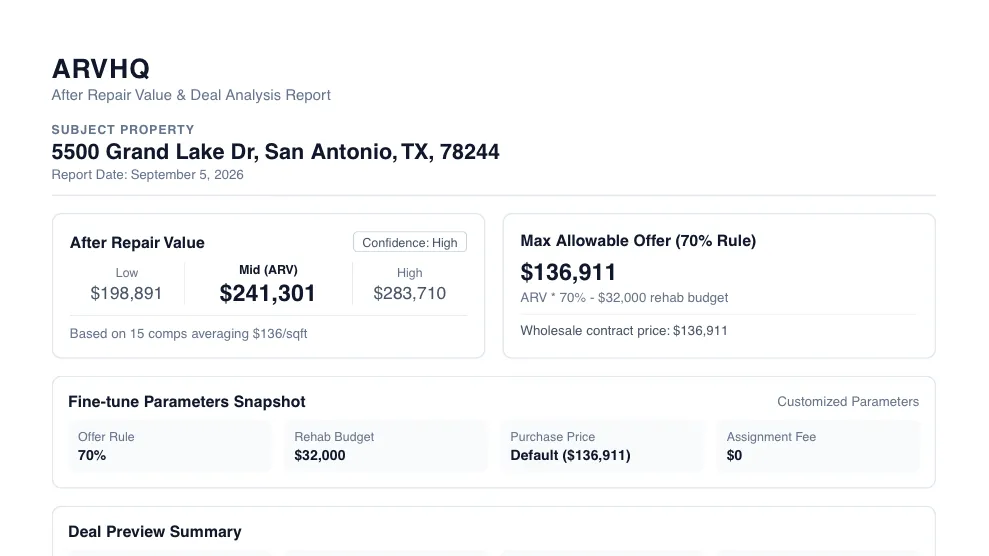
That is the focused gap ARVHQ addresses. By entering a US property address into the free ARV calculator, investors receive an instant ARV valuation range, an automated selection of comparable sold properties with similarity scores, and a maximum allowable offer (MAO) calculated using the classic 70% rule.
To understand how professional investors calculate these baseline spreads, review our in-depth guides on how to calculate ARV and how to find comps in real estate.
A note on transparency: ARVHQ is operated by the team behind this article, and its comps come from RentCast's nationwide database of public county-recorded sales — not real-time MLS feeds. Data sources and AI involvement are described on our AI disclosure page. New accounts get three free reports, and for high-stakes deals we always recommend verifying any automated estimate against your own comp check or a licensed appraisal.
Practical Recommendations for DealCheck vs PropStream
Deciding the DealCheck vs PropStream debate comes down to identifying your immediate business constraint.
You Should Choose DealCheck If:
- You already have deal flow from local real estate agents, wholesalers, or the MLS.
- You specialize in buy-and-hold rentals, BRRRR properties, or multi-family syndications.
- You need professional, branded PDF pitch decks to secure funding from private lenders.
- You want a dedicated mobile app to analyze properties while standing on the sidewalk.
- You want to keep software overhead under $30 per month.
Visit DealCheck official site to test the free tier.
You Should Choose PropStream If:
- You are a wholesaler or flipper whose number one challenge is finding motivated sellers.
- You need to build targeted marketing lists using distress indicators like tax liens or pre-foreclosures.
- You run outbound marketing campaigns involving direct mail, skip tracing, and cold calling.
- You need deep property history records, lien details, and nationwide MLS data.
- Your marketing budget comfortably supports a $99 per month software investment.
Explore the platform directly on the PropStream official site.
The Hybrid Approach: DealCheck vs PropStream in Tandem
For experienced investors, the outcome of DealCheck vs PropStream is not an either-or choice. High-producing wholesalers and flippers frequently combine both platforms into a cohesive acquisition assembly line:
- Prospecting in PropStream: Run targeted search filters across selected counties to pull lists of high-equity vacant homes.
- Initial Filtering with ARVHQ: Screen the most promising addresses through an automated tool to eliminate listings without adequate margin.
- Deep Underwriting in DealCheck: Take the vetted deals, plug the detailed rehab numbers into DealCheck, calculate the precise maximum purchase offer, and export a clean report for private money partners.
Frequently Asked Questions
Here are direct answers to the most common questions investors ask when reviewing DealCheck vs PropStream:
Is DealCheck better than PropStream?
No, DealCheck is not universally better than PropStream because each platform serves a different phase of real estate investing. DealCheck excels at financial underwriting, cash flow projections, and rehab budgeting, while PropStream dominates in off-market lead generation, distress filtering, and skip tracing. The superior tool depends entirely on whether your current challenge is finding deals or analyzing them.
Does DealCheck include MLS data like PropStream?
No, DealCheck does not provide nationwide real-time MLS listings and search filtering like PropStream. DealCheck pulls historical recorded sales and rental comp data through public records aggregator networks such as RentCast, whereas PropStream maintains direct integration with local MLS data feeds alongside county assessor recordings across the United States.
How much do DealCheck and PropStream cost?
As of September 2026, DealCheck offers a permanent free Starter plan, a Plus plan for $14 per month ($10 per month paid annually), and a Pro plan for $29 per month ($20 per month paid annually). PropStream costs $99 per month ($81 per month billed annually), with optional pay-per-use add-ons including skip tracing at $0.12 per contact and direct mail postcards starting around $0.40 each.
Can you pull motivated seller lists with DealCheck?
No, you cannot pull motivated seller lists with DealCheck. DealCheck requires you to enter a specific property address or import individual listings to perform financial analysis. If you need to generate outbound prospecting lists based on criteria such as absentee ownership, tax delinquency, pre-foreclosure, or high equity, PropStream is the appropriate software to use.
Summary Verdict: DealCheck vs PropStream
In the matchup of DealCheck vs PropStream, neither tool is a complete replacement for the other. DealCheck is an underwriting powerhouse that ensures you never overpay for an investment property. PropStream is a lead generation machine that ensures you never run out of prospective sellers to contact.
Evaluate your current bottleneck honestly. If you need more seller leads, start with PropStream. If you need to evaluate deals faster and present clean figures to lenders, start with DealCheck. And when you need an immediate after repair value check without loading either platform, run your address through our free ARV calculator to get instant clarity.